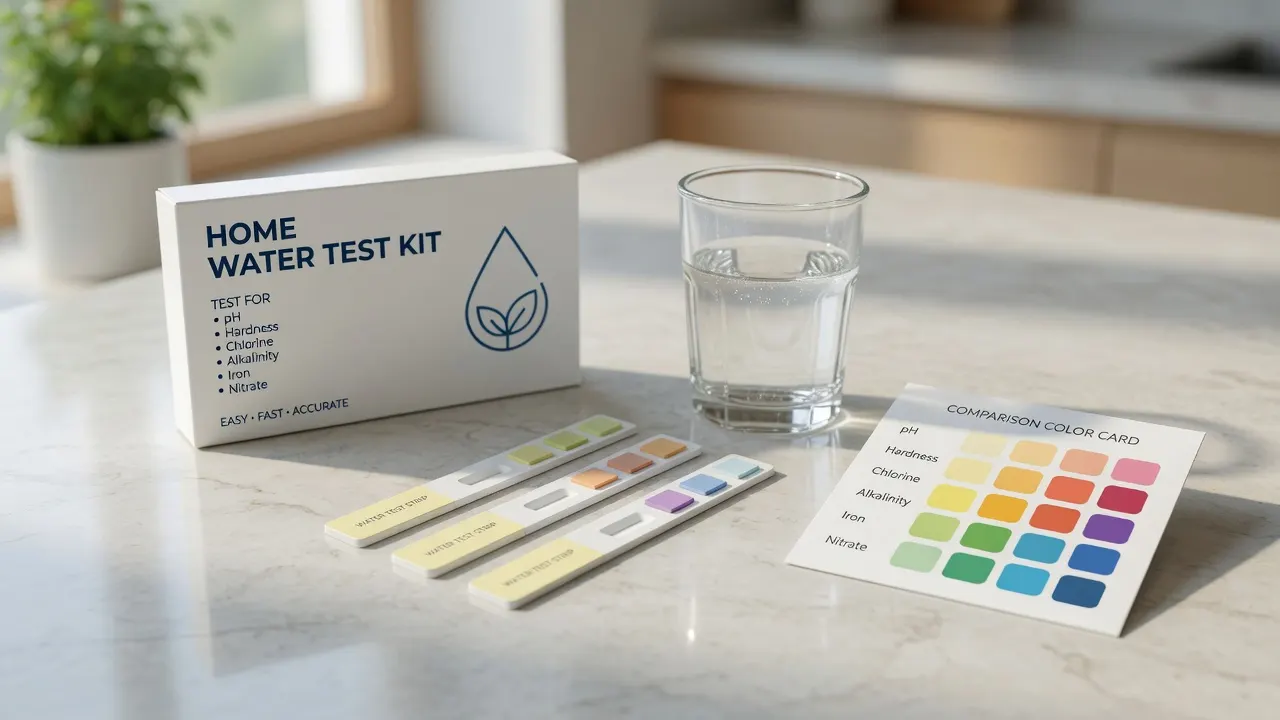
Home water testing kits are best treated as screening tools. They can help you decide whether to investigate further, but they should not replace a certified laboratory result when the question is lead exposure, private-well safety, a landlord dispute, a utility complaint, or a large filter purchase.
Good uses for a kit
- Learning whether you should order a more specific lab test.
- Checking simple, non-health clues such as hardness, chlorine, or pH.
- Comparing water before and after a filter as a rough screen.
- Deciding which official source to call next: utility, health department, or lab.
Where kits can mislead you
A kit result depends on the contaminant, detection limit, sampling method, storage time, and how carefully the instructions are followed. Lead is a special case: EPA says you cannot see, taste, or smell dissolved lead in water, and testing is the sure way to know whether harmful quantities are present.
What to check before buying a kit
We are not ranking kits yet. Use this as a pre-purchase checklist: the exact test scope, detection limits, lab backing, sample-return instructions, and reporting format matter more than the front-of-box promise.
Option 1 · Screening
Basic water screening kit
Best for general curiosity before paying for a lab.
- Must clearly list contaminants tested.
- Should avoid vague "safe/unsafe" marketing.
- Should explain detection limits.
Option 2 · Mail-in lab
Mail-in certified lab kit
Best when a written lab result matters.
- Must identify the lab and certification/accreditation.
- Should specify sampling instructions.
- Should show method and reporting limits.
Simple rule
Use a home kit to learn. Use a certified lab to decide. If lead is the concern, read the lead testing guide and protect drinking/cooking water with a certified point-of-use filter while you wait for results.