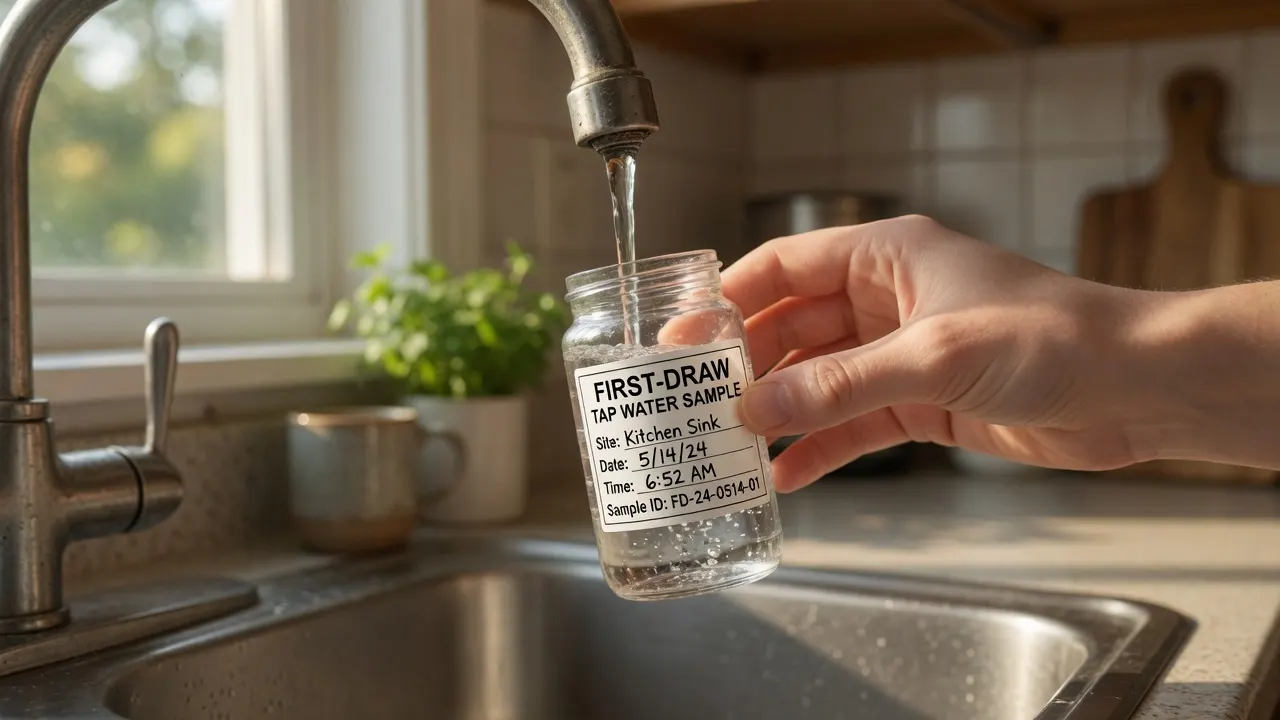
EPA says testing is the only sure way to know whether harmful quantities of dissolved lead are in your drinking water. CDC also notes that sampling results can vary by time of day, season, sampling method, water flow, and other factors.
Step 1: check your risk before ordering a test
- Search your utility's lead service line inventory or lookup page.
- Check whether your home was built before 1986.
- Look at the incoming pipe where water enters the home, if accessible.
- Read any utility notice that says lead, galvanized, or unknown.
Step 2: ask for the right sampling instructions
Do not improvise the sample. Ask the lab or water supplier whether they want a first-draw sample, a flushed sample, or both; how long water should sit; which tap to use; and how quickly the bottle must reach the lab.
Step 3: reduce exposure while you wait
- Use only cold tap water for drinking, cooking, and formula.
- Do not boil water to remove lead; boiling does not reduce lead.
- Use a point-of-use filter certified for lead reduction.
- Replace cartridges on schedule.
- Clean faucet aerators where particles can collect.
Step 4: connect the result to a fix
A positive lead result should lead to two tracks: immediate point-of-use protection at drinking/cooking taps, and a service-line/plumbing plan with the utility, landlord, or licensed plumber. A negative result is useful, but still save your utility inventory status and retest if plumbing work or line replacement disturbs the system.