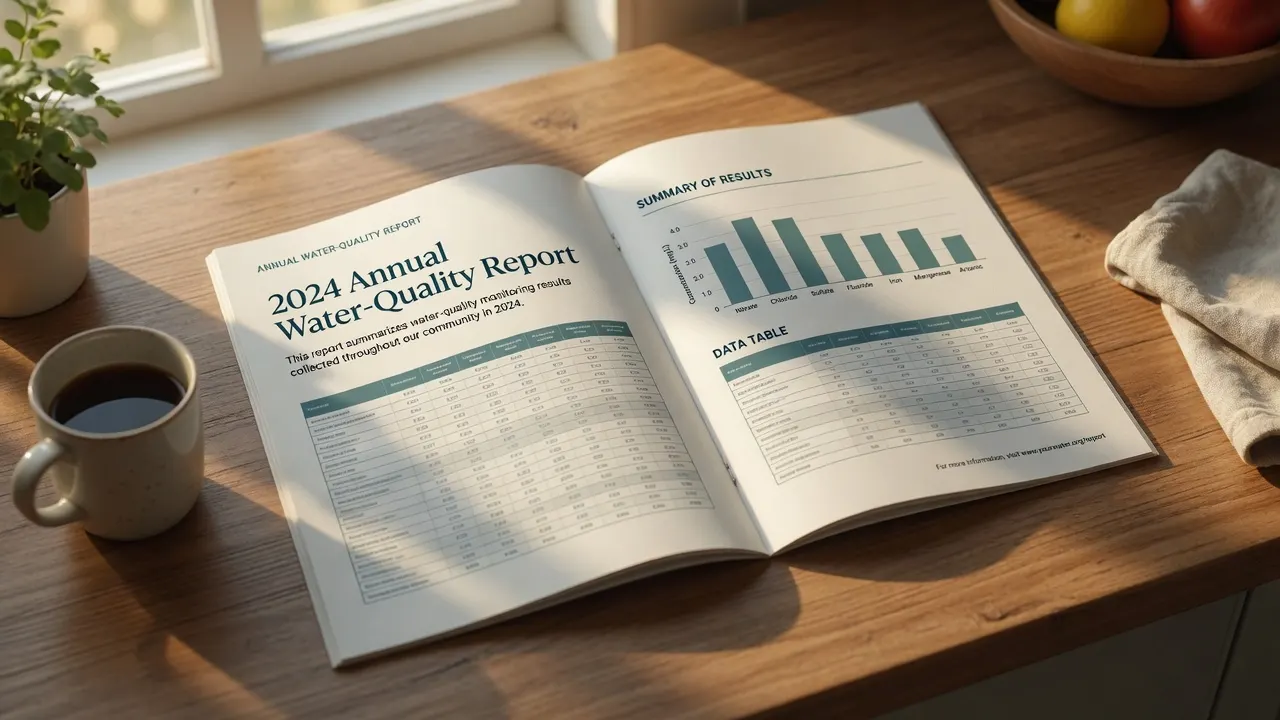
A Consumer Confidence Report is the annual water quality report for a community water system. EPA's CCR hub lets consumers find local reports, and eCFR says existing community water systems must deliver reports by July 1 each year with data from the previous calendar year or the most recent calendar year before that.
What to look for first
- Lead and copper table: look for the 90th percentile result, action-level language, number of sites above the action level, and sample period.
- Violation or public education language: if the system had a lead action-level exceedance or monitoring issue, the report should flag it.
- Service-line inventory links: newer reports and utility pages may point you to the public inventory or replacement plan.
- Source water and treatment: these explain the system, but they do not identify the pipe between the street and your home.
The trap: system report does not equal your tap
Lead usually enters drinking water from service lines, old plumbing, fixtures, and solder. That means a citywide report can look compliant while one older home still has a lead service line or lead-bearing plumbing materials. A CCR is a starting point, not a tap-specific test.
What to do after reading it
- If the report links a service-line inventory, search your address and save a screenshot of the result.
- If your line is lead, galvanized requiring replacement, or unknown, ask the utility about inspection and replacement programs.
- If you need protection now, use a point-of-use filter with model-level certification for lead reduction at the drinking/cooking tap.
- If you need proof of your own water quality, order a certified water test.
For a faster path, use the risk check and then compare your result with your utility's inventory and annual report.