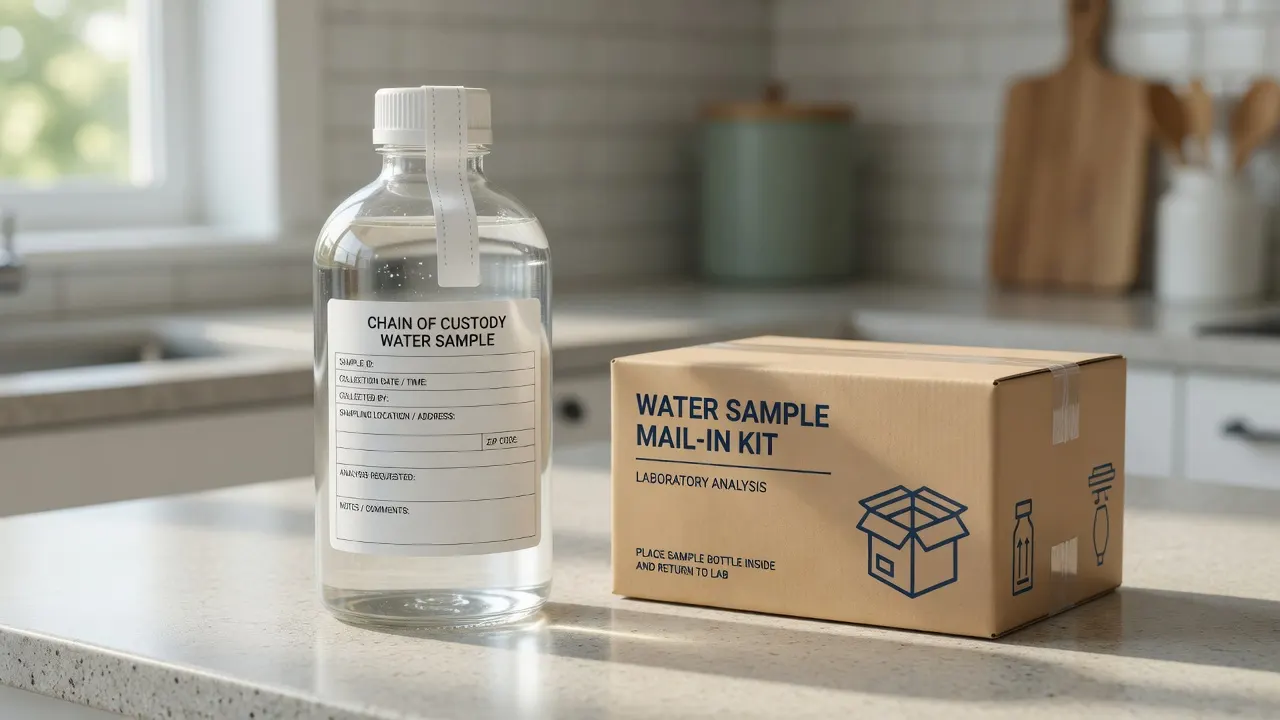
Search results for "water quality testing near me" mix labs, filter sellers, local utilities, and private well contractors. Start with the source that controls your water context, then pay for the test that matches the risk.
Who to call first
| Your situation | First call | Ask for |
|---|---|---|
| City water, lead concern | Your water supplier or state/local drinking-water authority. | Lead service line status, certified lead-testing labs, and sampling instructions. |
| Private well | County health department or state private well program. | Local contaminants of concern and recommended test frequency. |
| Bad taste, odor, or color | Utility for public water; health department/lab for private well. | Whether there is a system issue, flushing notice, or recommended panel. |
| Buying a filter | Lab first if the contaminant is unknown. | A result that tells you which certification standard matters. |
Questions to ask a lab
- Are you certified or accredited for drinking-water testing in my state?
- Which contaminants are included, and what are the reporting limits?
- Do I need a first-draw sample, flushed sample, or both?
- How quickly must the sample reach the lab?
- Will the report compare results with EPA drinking-water standards or action levels?
Do not skip the utility report
For public water, the annual Consumer Confidence Report can tell you what the system found in required monitoring. It does not prove your exact kitchen tap is safe, but it helps you choose a smarter test.