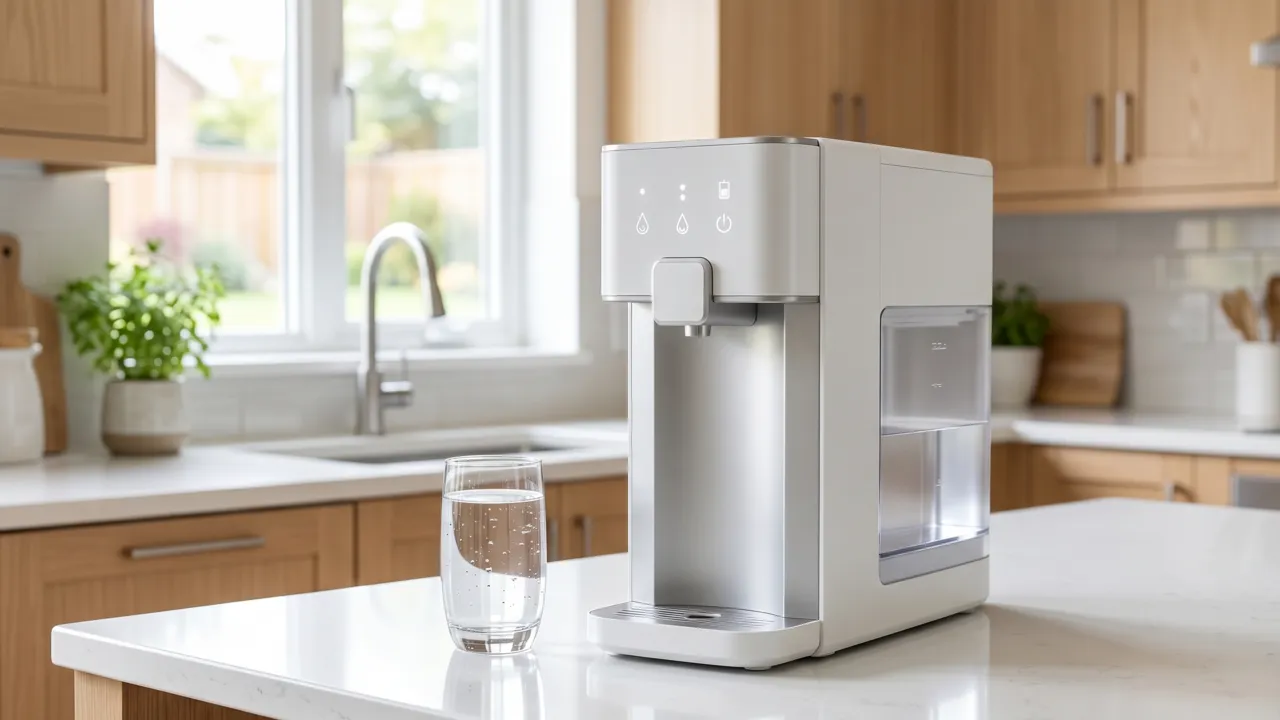
PFAS removal is the rare claim. Most carbon pitchers and faucet filters are not certified for it, and "reduces PFAS" on a box is marketing, not proof. A filter reliably removes PFAS only if the exact model is listed with NSF/ANSI 53 (carbon filters) or NSF/ANSI 58 (reverse osmosis) and a specific PFOA/PFOS reduction claim. EPA also warns that, as of April 2024, current home-filter certifications do not yet prove reduction down to the new federal PFAS limits, so treat certification as the floor — not a guarantee of a 4 ppt result in your kitchen.
The standard to look for
EPA tells consumers to check for NSF/ANSI 53 or NSF/ANSI 58 for PFAS reduction, then verify the directory or performance data names PFOA/PFOS. Older product pages may still mention the PFAS-only protocol NSF/ANSI P473, but the current consumer check is 53 or 58 plus the PFOA/PFOS claim. EPA lists five ANSI-accredited certification bodies for PFAS filters: CSA, IAPMO R&T, NSF, UL, and WQA.
Verified picks by type
| Type | Verified pick | PFAS certification | Best for |
|---|---|---|---|
| Pitcher | ZeroWater 5-stage pitchers/dispensers | IAPMO R&T to NSF/ANSI 53 (PFOA/PFOS) | Renters, lowest cost |
| Countertop reverse osmosis | AquaTru | IAPMO to NSF/ANSI 53 & 58 (PFOA/PFOS; also lead, arsenic) | Strongest, no plumbing — good for renters |
| Under-sink reverse osmosis | Waterdrop (G3P600 / G3P800) | IAPMO R&T to NSF/ANSI 58 (PFOA/PFOS) | Owners wanting high volume, plumbed in |
Which type fits you
- Reverse osmosis is the most reliable. AquaTru (countertop, no plumbing — renter-friendly) and Waterdrop under-sink systems are certified for PFOA/PFOS under NSF/ANSI reverse-osmosis standards; the trade-off is some water used in the process, mineral removal, and either counter space or a small install.
- Pitchers are the budget, renter route. ZeroWater is certified for PFOA/PFOS (and lead), but the certified service life is short, so cartridge cost matters. Clearly Filtered publishes strong independent-lab PFAS results, but its current public product page lists NSF certification for 42 and 372, not a current NSF/ANSI 53 PFOA/PFOS certification, so it stays out of the certified-pick table for now.
- Whole-house PFAS systems exist, but here certification is muddier — many advertise PFAS reduction on manufacturer/independent testing while their NSF marks cover material safety (61/372), not a PFOA/PFOS reduction claim. If you go whole-house, insist on a model-level PFOA/PFOS certification.
What does not count
- A standard Brita or generic carbon pitcher — see does a Brita remove PFAS.
- A plain "NSF certified" or "NSF/ANSI 53" badge with no PFOA/PFOS line — 53 covers many contaminants; you need the PFAS claim specifically.
- Boiling — it concentrates PFAS, it does not remove it.
How to confirm any pick in two minutes
- Copy the exact model number.
- Search the certifier shown on the package or data sheet — EPA lists CSA, IAPMO R&T, NSF, UL, and WQA for PFAS filter certification.
- Confirm the listing names PFOA/PFOS — not just "NSF certified."
- Replace cartridges or membranes on schedule.
For the bigger picture, read where the PFAS rule stands, and if lead is also a concern, the lead-filter picks overlap (RO and ZeroWater cover both).
This guide names models for information only — we do not use affiliate links here. Certifications come from third-party certification bodies, not from us. Verify the exact current model before buying.