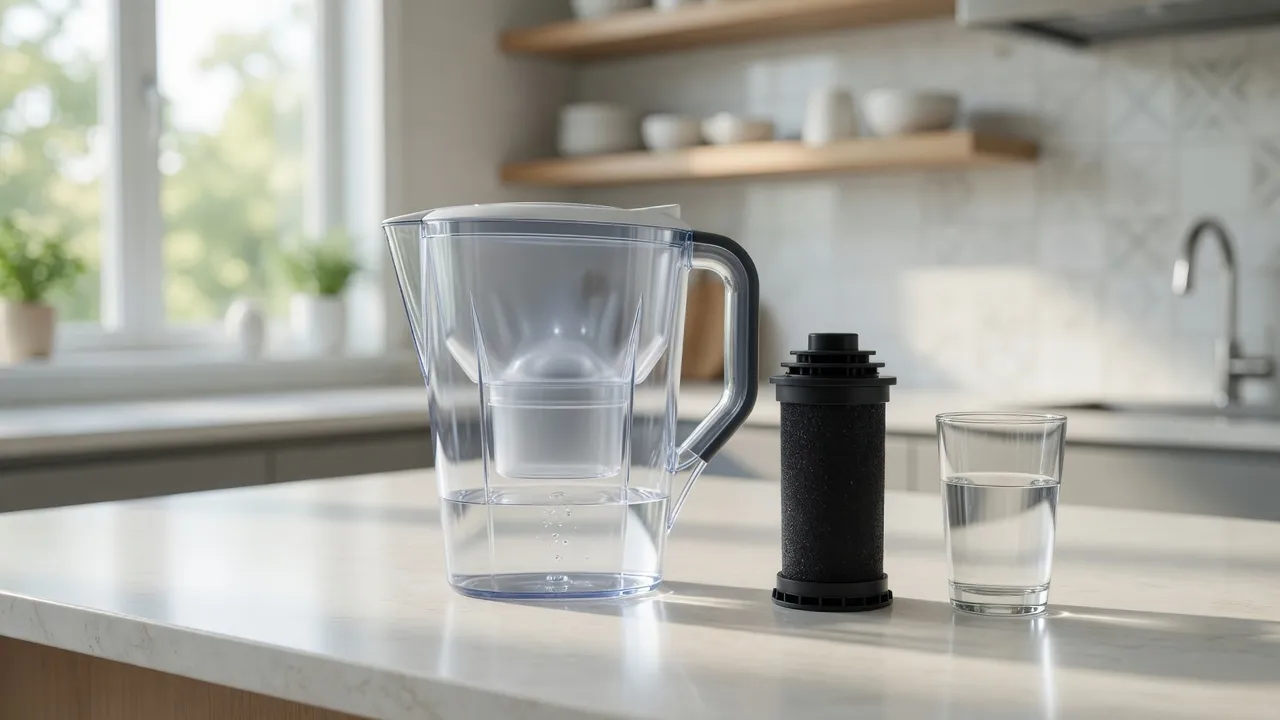
A Brita pitcher is the most common "water filter" in American kitchens, so it is the first thing people reach for when they worry about lead or PFAS. The honest answer is that it depends entirely on which Brita — and for PFAS, a Brita is not the claim to rely on unless the exact model sheet lists PFOA/PFOS reduction.
The short answer
- Lead: the Original/Standard Brita pitcher-dispenser filter is certified to NSF/ANSI 42 (taste/chlorine) and NSF/ANSI 53 for a few metals such as mercury, cadmium, and copper — but not lead. Some other Brita models, including Brita Elite, Brita Faucet Mount, and Brita Hub, list NSF/ANSI 53 lead reduction in their performance sheets.
- PFAS: Brita's current performance sheets we checked do not list a PFOA/PFOS or PFAS reduction claim. EPA tells consumers to verify a model-level NSF/ANSI 53 or 58 PFAS claim, so treat a Brita as no guarantee against PFAS unless the exact sheet says so.
Why "it filters water" is not enough
Carbon filters look the same; the certification is the difference. The labels that matter:
- NSF/ANSI 42 — aesthetic effects (taste, odor, chlorine). Useful, but not a lead or PFAS claim.
- NSF/ANSI 53 — health effects such as lead, when the exact model carries that specific claim (some models also carry a PFOA/PFOS claim).
- NSF/ANSI 58 — reverse-osmosis systems.
A generic "NSF certified" badge is frequently 42 only. See NSF 53 vs 58 for the full breakdown.
What Brita is — and is not — certified for
| Filter | Certified for | Lead? | PFAS? |
|---|---|---|---|
| Brita Original/Standard pitcher-dispenser filter | NSF 42 (taste/chlorine) + NSF 53 (mercury, cadmium, copper) | No | No listed PFOA/PFOS claim |
| Brita Elite (formerly Longlast) | NSF 53 — lead, plus the standard metals | Yes (lead) | No listed PFOA/PFOS claim |
| Brita Faucet Mount | NSF 42, 53, and 401 claims listed on the model sheet | Yes (lead) | No listed PFOA/PFOS claim |
| Brita Hub | NSF 42, 53, and 401 claims listed on the model sheet | Yes (lead) | No listed PFOA/PFOS claim |
Brita's lineup and certifications change, so confirm the exact model in NSF's certified database rather than trusting the box.
If lead is your concern
Use a model with an NSF/ANSI 53 lead claim — that can be a certified pitcher, a faucet mount, or an under-sink unit — or a reverse-osmosis system (NSF/ANSI 58). The filters guide matches a certified type to your home, and you can confirm your own pipe risk with the lead testing guide.
If PFAS is your concern
Do not assume a pitcher brand claim is enough. EPA points consumers toward filters with a model-level PFAS claim: reverse osmosis systems certified to NSF/ANSI 58 for PFAS reduction, or carbon filters certified to NSF/ANSI 53 with a specific PFOA/PFOS claim. Verify the model, and read where the PFAS rule stands.
How to check any filter in two minutes
- Copy the exact model number from the package or product page.
- Search NSF's certified database, or EPA's certified lead-filter tool.
- Confirm the listing names the contaminant — lead, or PFOA/PFOS — not just "certified."
- Replace cartridges on schedule. An exhausted filter can release what it has collected.
Some filter links elsewhere on this site are affiliate links, at no cost to you. Certifications come from NSF, not from us.