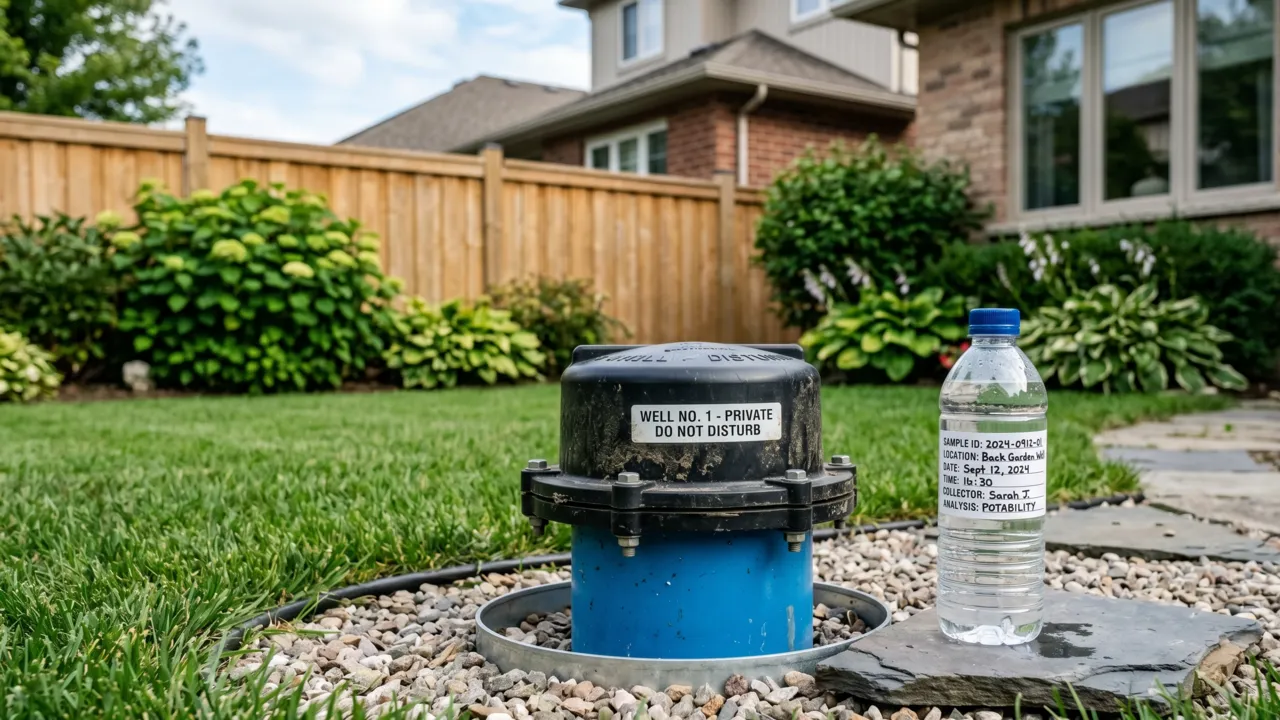
Here is the part well owners often miss: private wells are not regulated by the EPA under the Safe Drinking Water Act. The lead rule, the PFAS rule, the annual water reports — those cover public water systems. If you are on a well, you are the water utility, and testing is your job.
Test every year
EPA and CDC recommend testing a private well at least once a year for the basics:
- Total coliform bacteria — a core safety indicator; many labs also report E. coli or fecal coliform if the result suggests fecal contamination.
- Nitrate — especially important where there is agriculture or septic nearby; a serious risk for infants.
- pH and total dissolved solids (TDS) — corrosion and general water-quality signals.
Add a broader panel periodically
Beyond the annual basics, test for local contaminants of concern on a longer cycle — every few years, or when you first move in. Depending on your area, that may include lead, arsenic, mercury, radium, VOCs, pesticides, herbicides, or other local chemicals; EPA also flags metals near mining, landfills, factories, gas stations, or dry-cleaning operations. Your county or state program can tell you what is common where you live — see heavy metals in water.
Test immediately when something changes
- There is a known groundwater or drinking-water problem in your area.
- Conditions near the well change — flooding, land disturbance, or new construction or industrial activity.
- You repair or replace any part of the well system.
- You notice a change in taste, odor, or color.
- Someone in the home is pregnant or nursing, or you have infants or elderly residents — test more often, since they are more vulnerable.
Use a state-certified lab
For results that matter — bacteria, nitrate, metals — use a state-certified laboratory, not a hardware-store strip. Your county or state drinking-water program keeps a list of certified labs and often the recommended test package for your area. The finding-a-lab guide walks through who to call.
Lead and wells
On a private well, lead is usually a house plumbing problem rather than a municipal lead-service-line problem: EPA flags household plumbing or service lines that contain lead, corrosion, low/high pH, solder, and fixtures as reasons to test for lead and copper. If you have older plumbing, include lead in your panel; if it shows up, use a point-of-use filter certified to NSF/ANSI 53 for lead at drinking and cooking taps. See how to test for lead and the certified-filter picks.