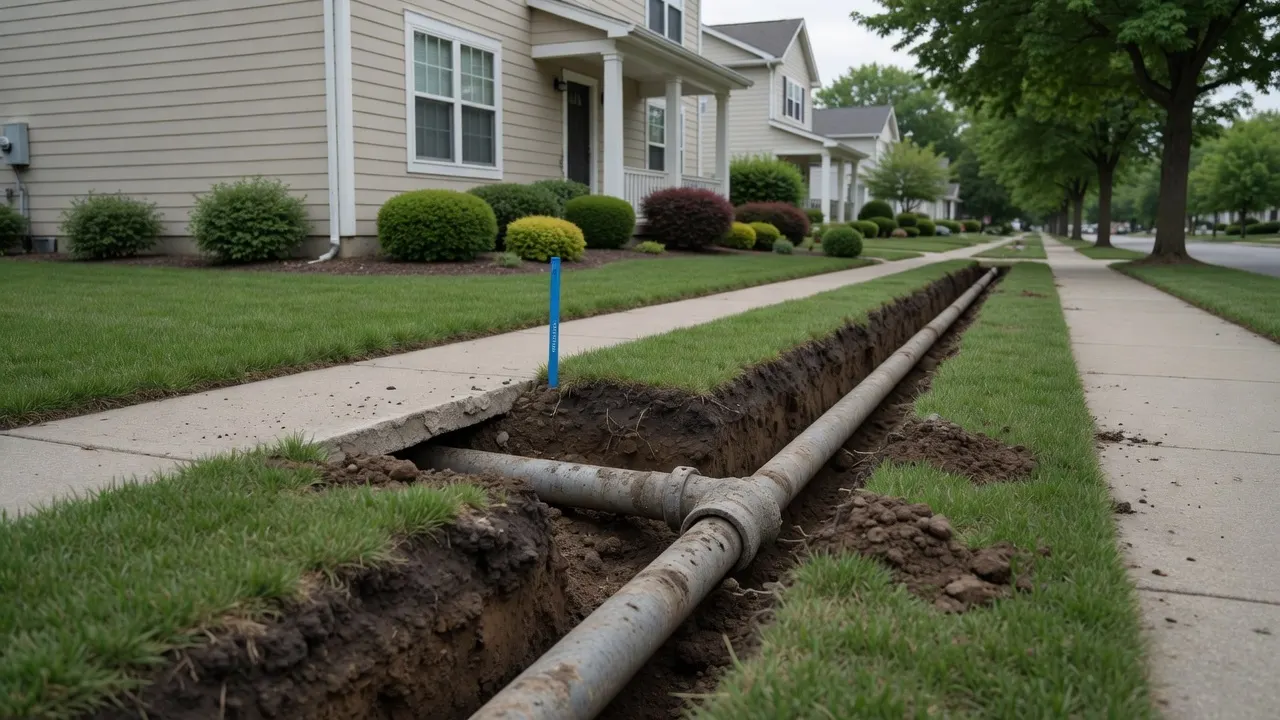
A service line is the small pipe that connects your home to the water main under the street. Many utilities distinguish a public side and a private side, but the exact ownership boundary varies by city and utility.
That local rule matters because replacement is expensive: Newark lists typical service-line replacement at $5,000–$10,000, while older private-side estimates are often several thousand dollars. Before you treat that as your bill, check whether your utility, city, or state pays all or part of the work.
Why partial replacement is a trap
Replacing only half a lead line is worse than it sounds: cutting and disturbing the pipe can shake loose lead particles and temporarily raise lead levels at the tap. The EPA's 2027 rule pushes utilities toward full replacements for exactly this reason. If your utility offers to do the public side, ask how the full line gets done at the same time.
Before you pay: three calls to make
- Your water utility. Many now run cost-share or fully funded replacement programs, and federal/state revolving-fund money can support lead service line replacement. Ask: "Do you have a lead service line replacement program, and am I eligible?"
- Your city or state health department. Some states add grants or low-interest loans on top, especially for lower-income households and homes with children.
- Approved contractors only. If a program exists, it usually requires utility-approved plumbers. Hiring your own contractor first can disqualify you from reimbursement.
If you have to wait
Replacement queues run years in big cities. In the meantime, an model certified for lead reduction on your drinking-water tap can reduce exposure while you wait — see which filters actually work.